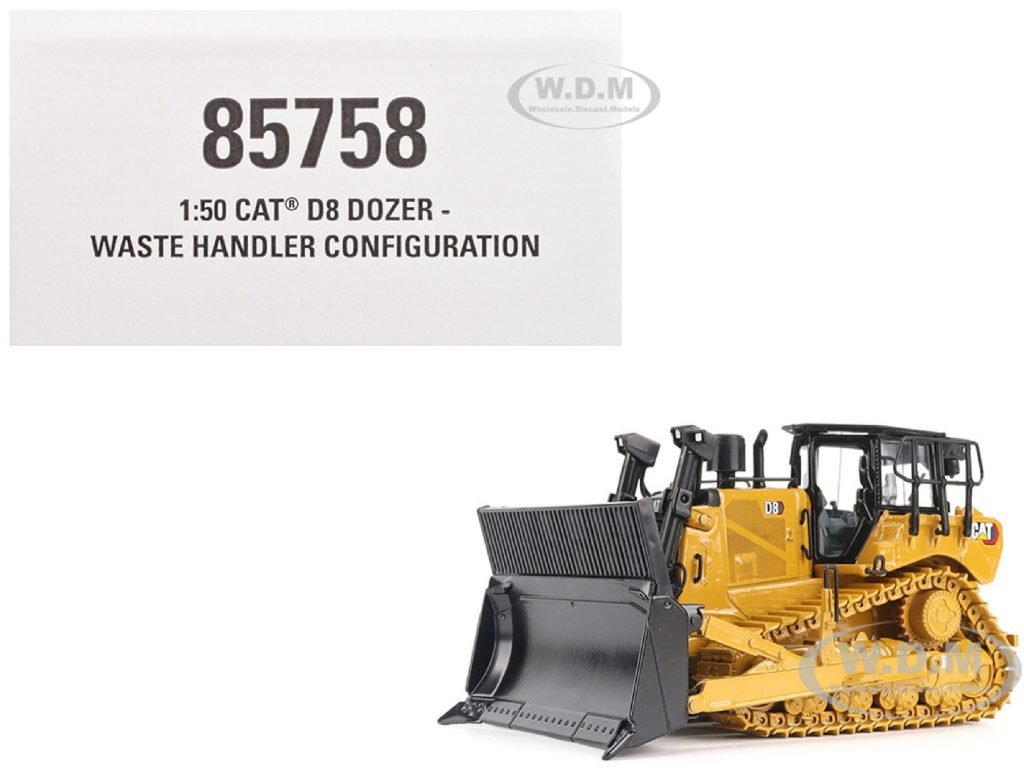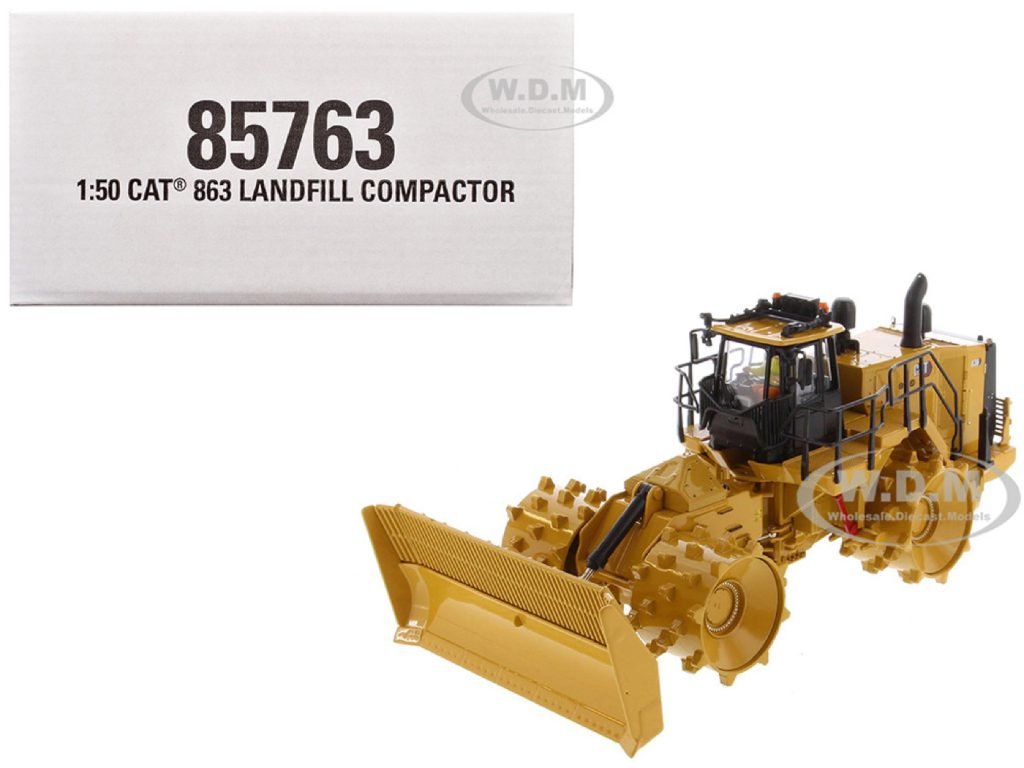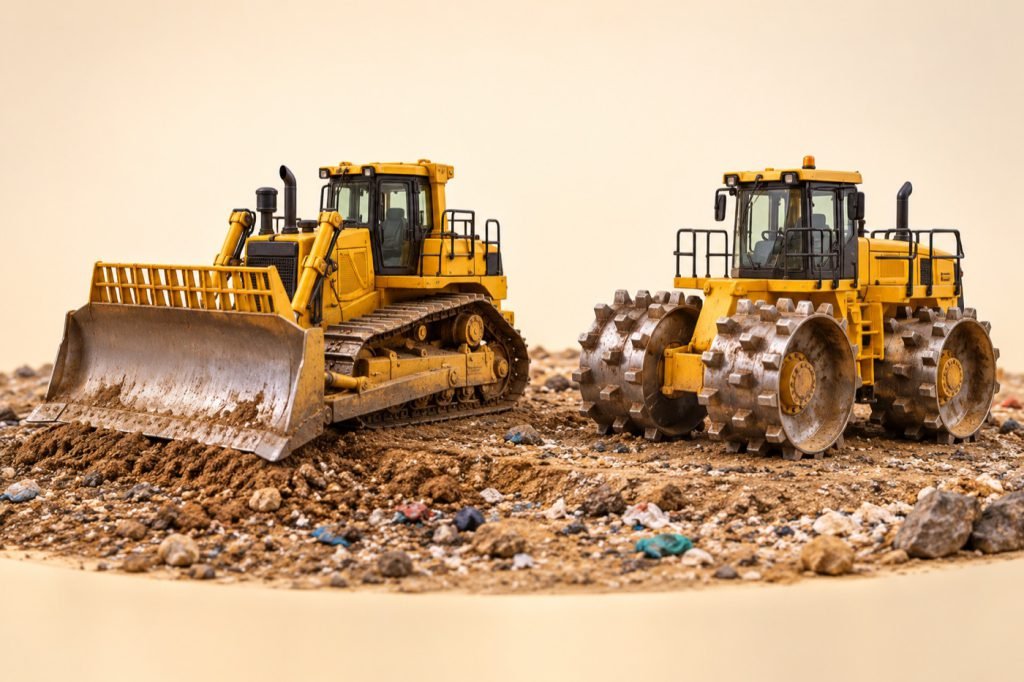
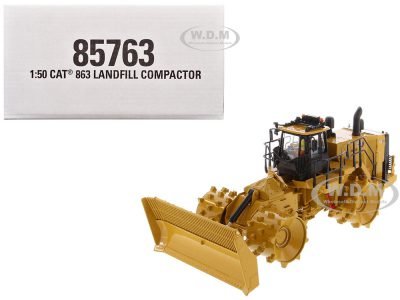
These two models represent different landfill equipment roles. They should not be ranked as though the only difference were which has the larger blade. The choice is whether the collection needs a tracked waste handler or a compactor whose wheel construction is itself the subject.
The running gear carries the identity
| Model | Distinguishing equipment | A view that would obscure the point |
|---|---|---|
| D8 waste handler 85758 | Tracks, tall trash grille and rear cabinet | A pile hiding the blade grille |
| 836 compactor 85763 | Specialized wheel outers, tips and adjacent striker bars | A front-only view that hides the wheel arrangement |
The 836 inspection documents independent wheel rotation and rear-axle oscillation. The D8 inspection documents rolling tracks with non-functional roller detail. Those observations explain differences in the miniatures; they establish no miniature compaction or pushing capacity.
Both allow the operator to be left out, so occupancy does not distinguish them. A collection that already has a standard D8 may gain more subject variety from the 836, while a collection of D8 configurations may specifically need the waste handler. That is a collecting judgment, not a claim that one model is universally better.