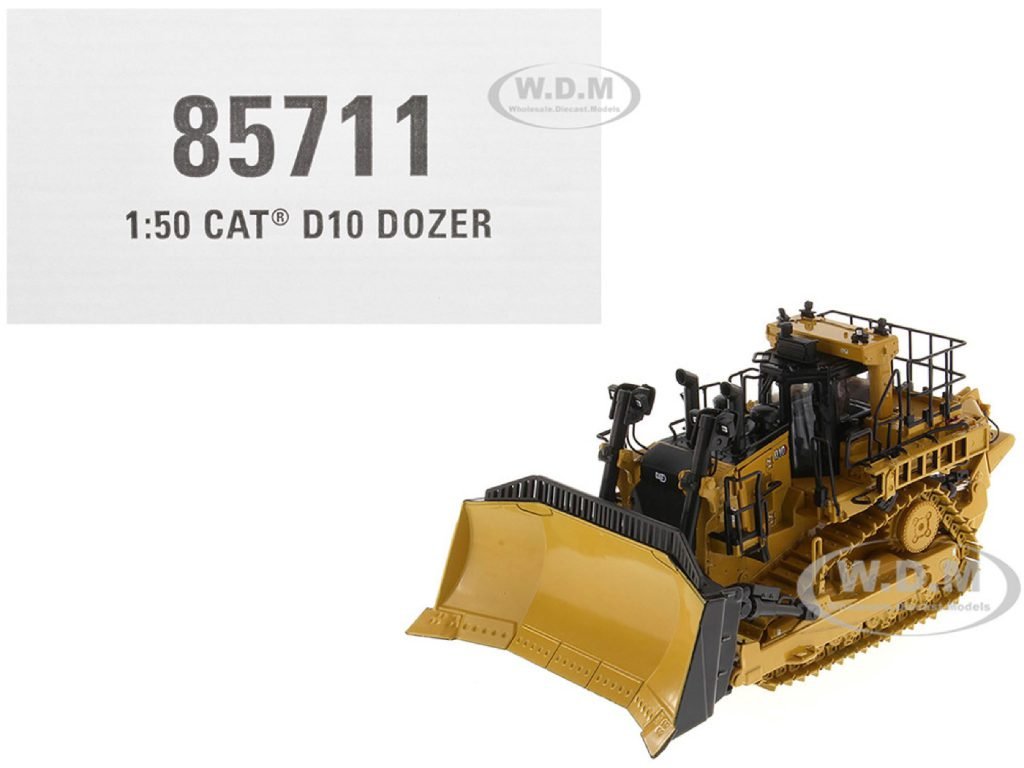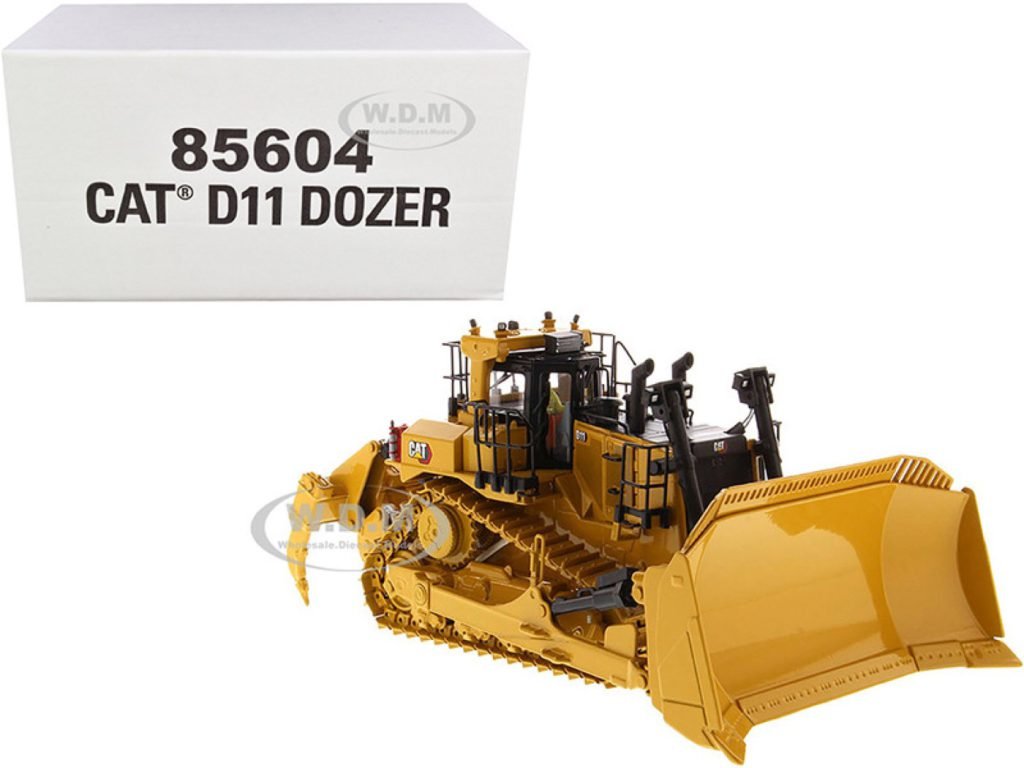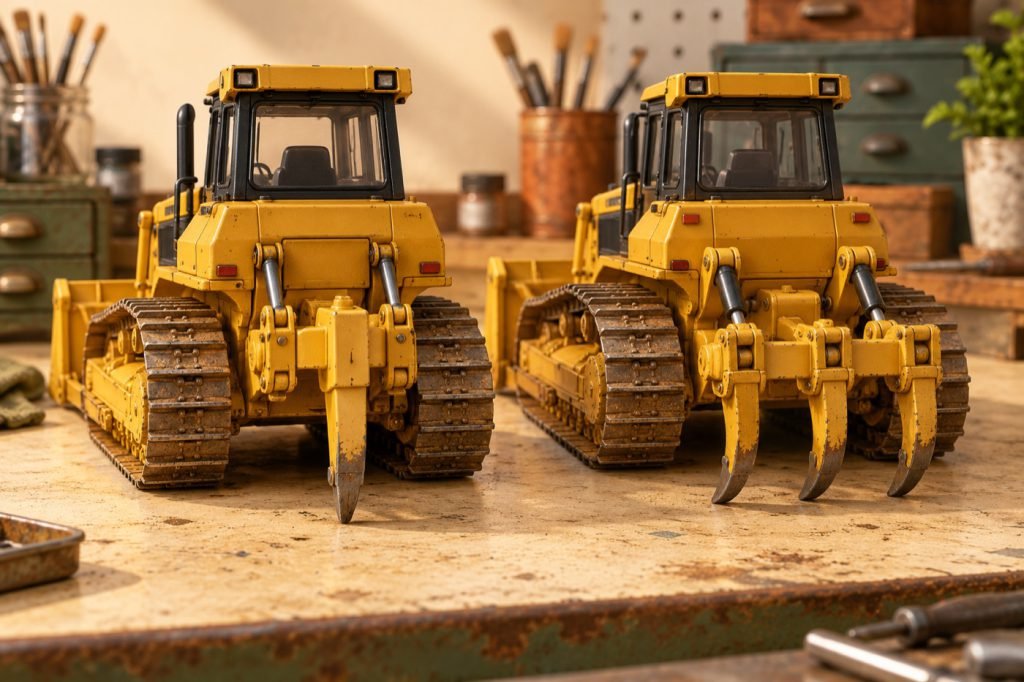
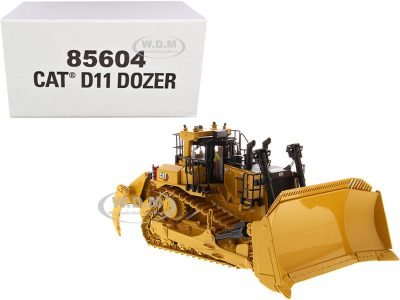
Turn both models around before deciding. The relevant difference is not simply D10 versus a larger machine designation: 85711 represents a single-shank rear arrangement, while 85604 presents three shanks. A front-only display could hide the most useful reason to prefer one.
| Question | D10 · 85711 | D11 Fusion · 85604 |
|---|---|---|
| Ripper subject | Single shank; fixed tooth length | Three shanks |
| Observed rear movement | Shallow penetration | Useful travel; stiff mechanism |
| Merchant dimensions, L × W × H | 5.5 × 2.75 × 3.25 in | 9 × 4 × 5 in |
| Dimension basis | Approximate; pose unspecified | Approximate; pose unspecified |
Do not turn a nominal size into a scene
The catalog dimensions are useful for an initial allocation of shelf space. They do not establish the exact extent of an opened or tilted arrangement. If either model must fit between existing scenery, obtain a measurement of that state before making the choice.
The D10 review makes the shallow rear-ground interaction explicit. The D11 Fusion review preserves the reused underside number and the three-shank configuration. Neither is a substitute for confirming the identity of an opened secondhand offer.
Make the rear visible—or change the buying criterion
On a shelf viewed from one side, sketch the normal viewing line first. If neither rear arrangement can be seen, choose the exact machine you collect and assess the visible finish. Paying attention to a feature that will stay hidden does not improve the display.