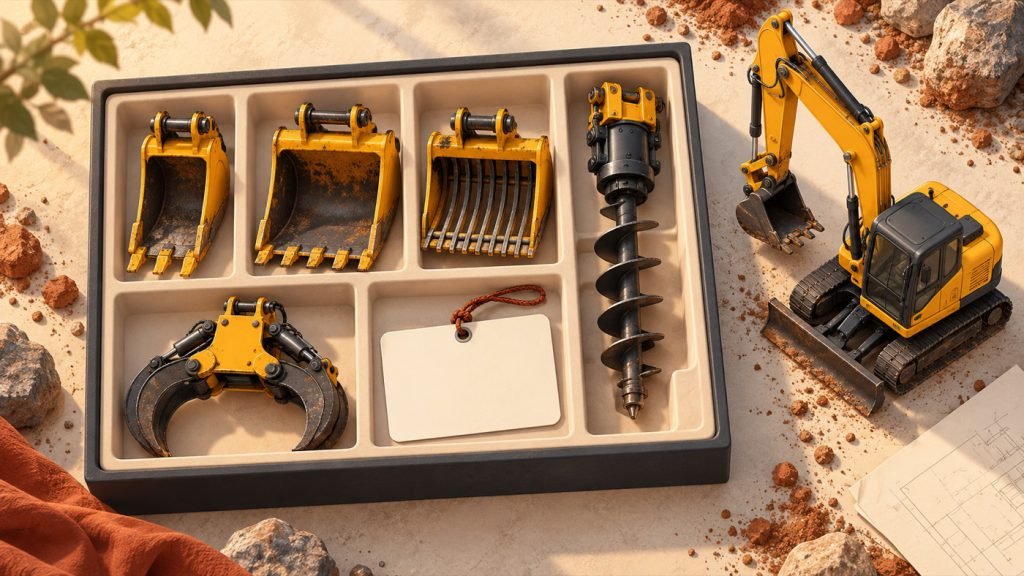
Loose attachments are easiest to misidentify after several similar models share a shelf. Keep each spare tool connected to the exact model record before rearranging the display. The aim is an accurate inventory, not a new claim that similar connectors are interchangeable.
Record the tool, not just “accessories included”
| Field | Example entry |
|---|---|
| Model identity | Diecast Masters 85782 · CAT 938 |
| Loose item | Telescopic lifting beam |
| Evidence of inclusion | Confirmed offered contents / inspected package |
| Current location | Named compartment in the model’s accessory tray |
| Separate props | Chain acquired separately, if present |
The 938 review provides a concrete reason for the last row: a chain pictured in the inspection is not supplied. Recording it separately prevents a future inventory or sale description from turning a display prop into an original accessory.
Keep uncertain contents unresolved
For the 308 CR package, the fourth-tool conflict should remain a note until the actual box is checked. Do not let a tidy spreadsheet silently convert an expectation into a verified hammer or mulcher.
Store by identity before sorting by shape
Use a separate, labeled location for each model’s loose items and retain the original packaging when available. Follow the manufacturer’s packing directions for delicate parts; this guide does not establish a universal protective material or connector-removal method. Photograph the contents before moving them to a different organizer.
When a tool is fitted, mark that location rather than marking the item missing. When a figure is removed for an empty-cab display, record it alongside the same exact code. A future completeness check should be possible without guessing which machine originally owned each part.