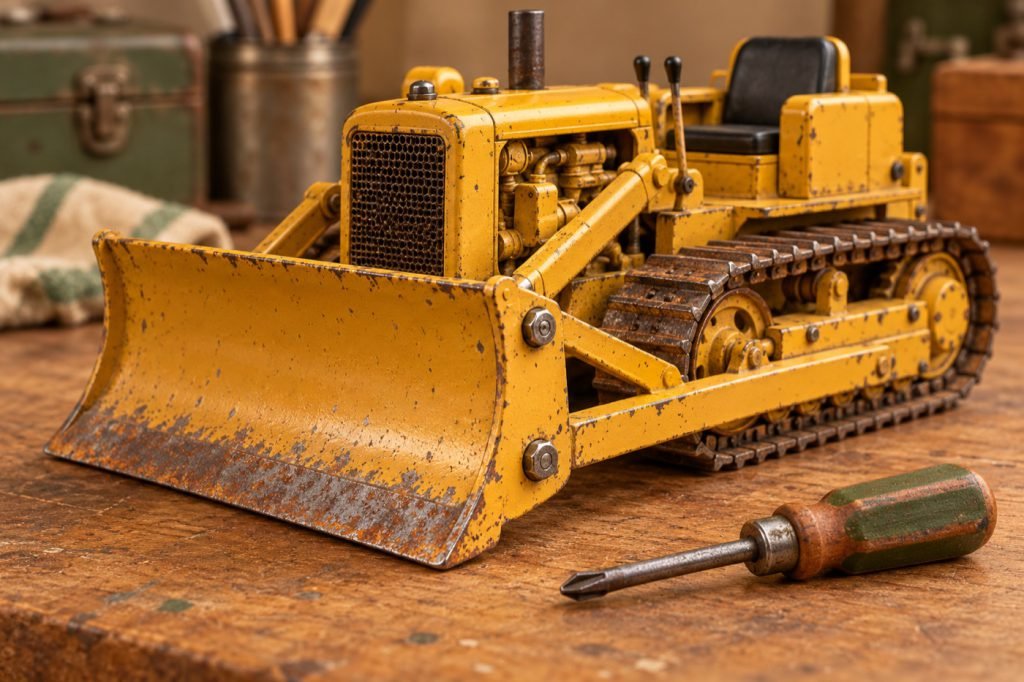
“Adjustable blade” can describe two different things: a part that moves through its normal range, or an assembly that must be reset at its fixing points. Before touching the blade, determine which meaning applies to the exact miniature.
Read the verb with the mechanism
| Description | What it establishes |
|---|---|
| Raises and lowers | Movement on one axis; not automatically side-angle movement |
| Repositioned with fasteners | A configuration change; not a freely swinging joint |
The D7C 85577 inspection-based review identifies a blade angle selected using two screws. That gives left, straight and right configurations, but does not justify pushing the blade sideways by hand as though it were an unrestricted pivot.
Choose a state before attempting a change
Decide which orientation belongs in the display, then consult the supplied instructions for that exact release. An inspection describing a screw-set feature is evidence of the mechanism, not a complete maintenance procedure. This guide does not provide tool sizes, torque values or a disassembly sequence that the retained sources do not establish.
How to describe an opened offer
A seller photograph should show the current blade state and the relevant fixing area. “Blade moves” is too vague to explain which axis or configuration was demonstrated. Record the specific movement separately from the presence and condition of fasteners.
The same discipline applies when comparing a period tractor with a modern VPAT model: select the subject and required pose, then verify how that exact miniature reaches it. A generic feature count hides the distinction.