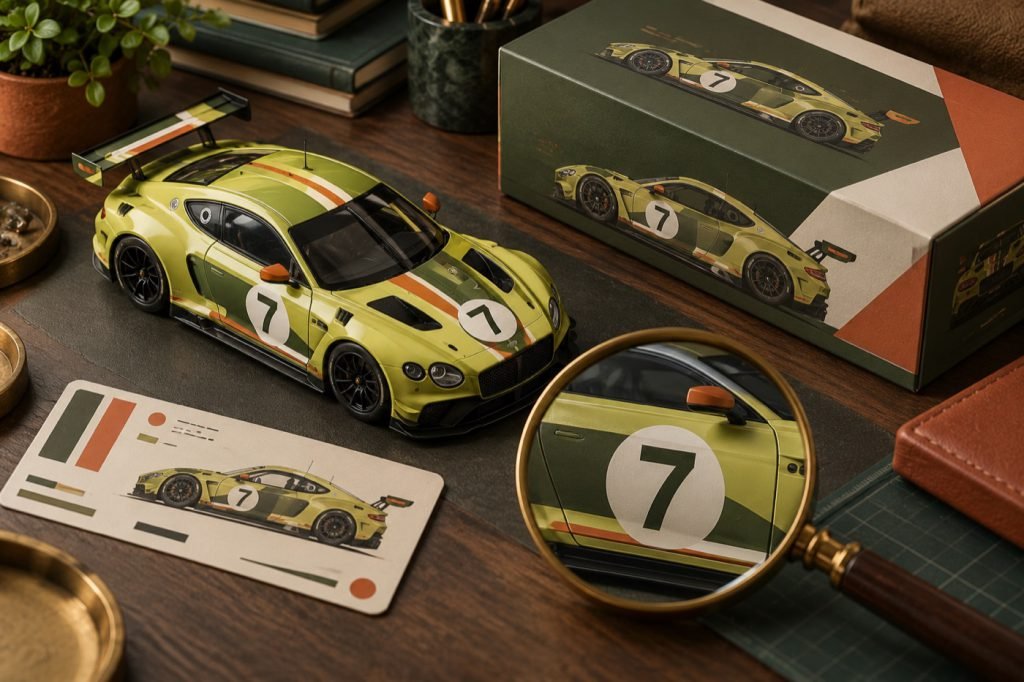
Build a race-model identity from five facts: vehicle, event, year, race number and miniature manufacturer code. A matching number alone is not enough. The output should be a line you can compare with the offered box and photographs.
| AUTOart 81808 | Aston Martin Vantage GTE · Le Mans · 2018 · No. 95. |
|---|---|
| AUTOart 88700 | Audi Sport quattro S1 · Pikes Peak · 1987 · No. 1. |
The Vantage inspection and Audi inspection document those decorated subjects. Keep the facts together: “yellow Aston” or “No. 1 Audi” discards information needed to distinguish another release.
Resolve a mismatch instead of averaging the clues
- Title and box agree, photographs do not: ask whether the photographs show the physical item being supplied.
- Race number agrees, event or year differs: keep the listings separate until the represented entry is confirmed.
- The body is plain: establish whether this is an intentional plain-body edition before expecting missing graphics in the box.
The last case applies to Peugeot 81356, explicitly the plain-black Pikes Peak version. Its shape belongs to the subject, but a photograph of the decorated full-size car cannot supply livery absent from the miniature offer.
A seller question that can settle the purchase
Adapt that request to the actual discrepancy: a rear marking may be more useful than a number panel. Asking which item will arrive is more answerable than asking whether the model is broadly “accurate.”
Save the confirmed identity line with the relevant photographs in your collection record. If the seller cannot resolve the conflicting edition clues, leave the identification open rather than treating the most attractive image as definitive.