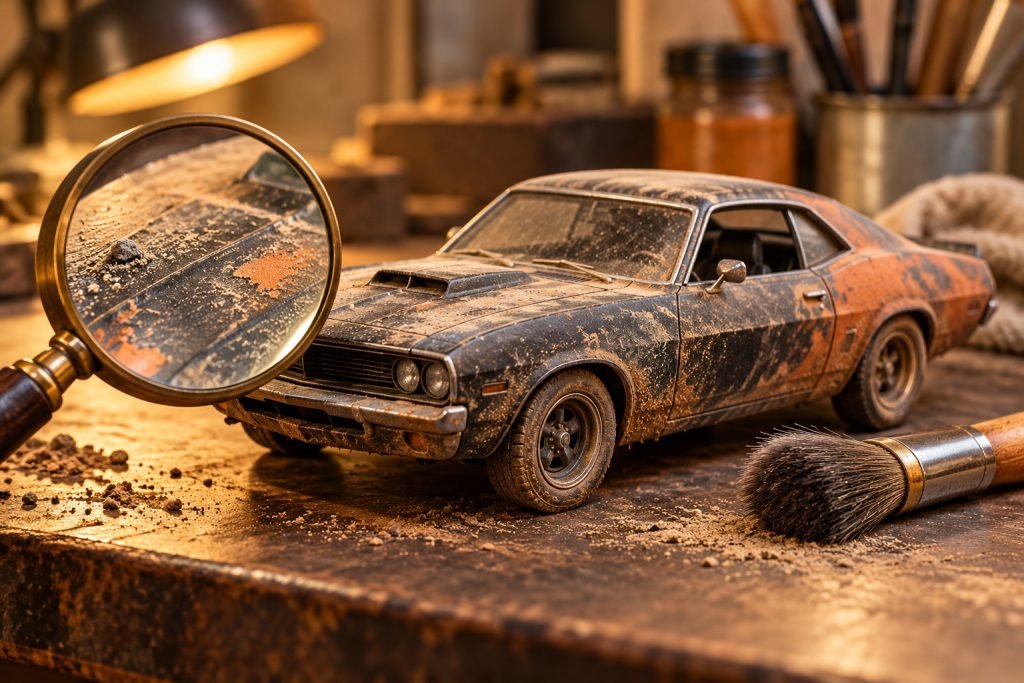
A weathered edition can intentionally depict wear, while the individual example can still have unrelated damage. Check the intended finish and the item’s present condition separately; the word “weathered” does not resolve both.
Establish what the manufacturer’s edition is meant to show
The merchant names Greenlight 13567 as a weathered A-Team van with bullet holes. That supports the identity of a deliberately distressed edition. It does not prove that every chip, broken part or mark on an offered example belongs to the design.
Does the exact code identify a factory-weathered release? Compare against photographs of that same release, not a clean version of the van.
What marks, missing pieces or damage are present on this particular model? Ask the seller to describe these separately from the intended finish.
Compare the same areas from the same angle
- Request both sides, the roof and close views of the area in question.
- Distinguish painted effects from a missing or displaced physical part.
- If a mark cannot be matched to the documented finish, record it as unresolved rather than calling it intentional.
Contrast this with the scratch report for Jada 30916: that account concerns a newly opened model’s condition, not a named weathered finish. Keep those two kinds of evidence separate when deciding what condition you will accept.