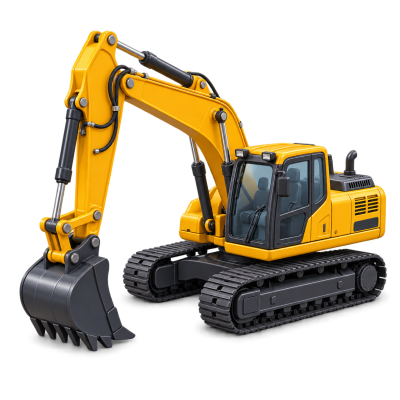
Diecast Masters 85233 CAT 420F2 IT review: versatility at both ends
The 420F2 IT offers work at both ends, but its front carry geometry and stabilizer travel constrain ambitious loading or transport scenes.
At a Glance
Model essentials
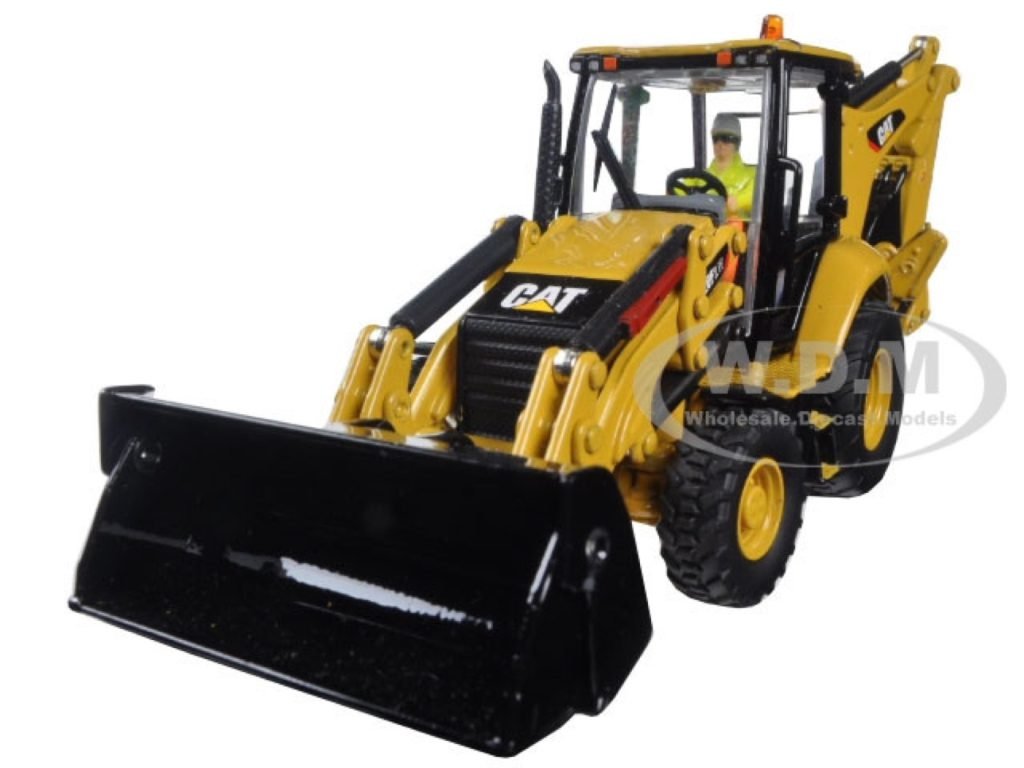
- 1:50 center-pivot backhoe
- Interchangeable work tools
- Steering and oscillating front axle
Collection highlights
- Front and rear working subjects
- Extending rear stick
Before you choose
- Front lift and carry limits
- Pads do not lift rear wheels in inspection
Available from Diecast Models Wholesale
View model at retailer ↗Price and availability subject to change
A front loader and a rear excavator give this backhoe two different working ends. The useful question is not how many poses can be imagined, but which end will face the viewer. Decide that before adding a trench, pallet or workbench around the model.
| Front-facing scene | Rear-facing scene |
|---|---|
| Bucket or fork work | Excavation or an attachment task |
| Leave space ahead of the loader | Reserve room for the rear arm and pads |
| Check the required carry position | Check the operator’s viewing direction |
The 420F2 inspection found easy attachment changes, an extending rear stick and a telescopic material arm. It also found restricted front lift and carry angle. More tools do not make every loading pose convincing.
Pads down does not mean wheels up
The sample’s stabilizers could not lift its rear wheels clear. If that suspended stance is the point of the scene, this is the wrong capability to assume. Keep the supports and tires in the documented arrangement.
Pros & Cons Analysis
See the source attributions and review limitations below.
Pros
- Front and rear quick-hitch arrangements accepted the supplied tools in the inspection. That gives the backhoe two useful working ends rather than a single interchangeable accessory position.
- The extending rear stick and telescopic material arm create visibly different silhouettes; choose the one that explains the intended job.
- The opening front bucket adds an operation beyond a closed scoop. It may matter more to a finished scene than the total number of loose tools.
Cons
- Front lift and carry geometry are restricted. A tool-rich package does not guarantee that the loader can hold a convincing elevated or loaded pose.
- The inspected stabilizers neither lifted the rear wheels nor retracted fully for transport. These are distinct limits on working and folded presentations.
- The original sample had a wrongly assembled fork component and lacked useful fitting instructions. Check the offered contents and documentation without treating one sample as a defect rate.
Let one working end lead
For a tool-focused worksite
Choose the task first and put the corresponding end in clear view.
For a precise transport pose
Inspect folded supports and the loader position before committing.
Frequently Asked Questions
Is the pallet shown with the forks included?
The inspection explicitly says its photographed pallet was not included. Confirm any additional scenic items separately.
Can the pads support a wheels-off-ground display?
That position was not achieved by the inspected rear stabilizers. Do not assume more travel or force the mechanism to create it.
Technical Specifications
| Brand | Diecast Masters |
|---|---|
| Product code | 85233 |
| Subject | CAT 420F2 IT |
| Edition / version | High Line Series |
| Color / livery | Caterpillar yellow |
| Scale | 1:50 |
| Model type | Backhoe loader |
| Materials | Diecast metal with plastic parts |
| Length | 6.5 in |
| Width | 2 in |
| Height | 3 in |
| Measurement basis | Approximate catalog dimensions; pose unspecified |
| Opening panels | Unknown |
| Moving parts | Steering; oscillating axle; loader and clamshell bucket; rear boom and extending stick; stabilizers |
| Lighting | Unknown |
| Power source | Unknown |
| Included figures | Seated operator in inspection |
| Included equipment | Front/rear buckets; hammer; material arm; auger; forks in inspection |
| Display base | Unknown |
Diecast Masters 85528 CAT 745 articulated truck 1:50 review