Diecast Masters 85944 CAT D9T review: blade tilt adds more than a deep-ripping pose
Assess the D9T’s blade tilt and single-shank ripper separately: the front offers posing interest while rear ground penetration remains shallow.
At a Glance
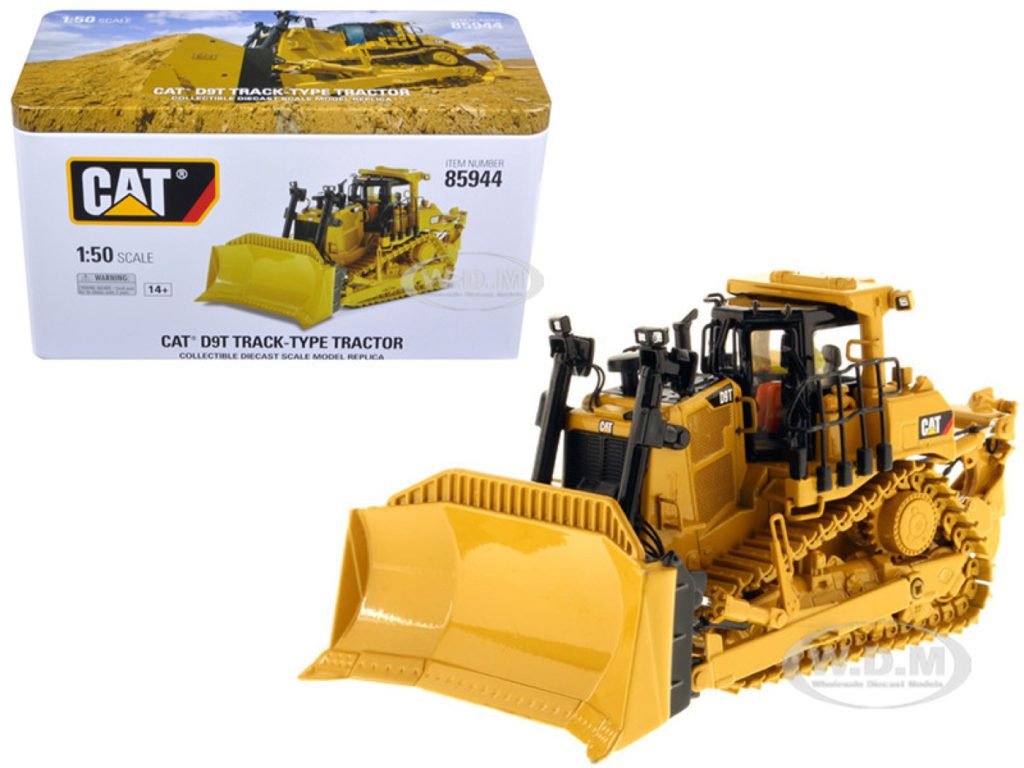
Model essentials
- 1:50 D9T · single-shank ripper
- Blade lift and tilt
- Metal tracks
Collection highlights
- Useful blade tilt
- Detailed metal track links
Before you choose
- Shallow ripper penetration
- Solid upper blade grille
Available from Diecast Models Wholesale
View model at retailer ↗Price and availability subject to change
A blade that tilts and a ripper that reaches deeply are separate functions. The D9T inspection supports the first more strongly than the second. Buying it as a single-shank-ripper model without checking that distinction risks choosing the right attachment silhouette for the wrong working pose.
Movement map: front to rear
| Assembly | Observed behavior | Boundary |
|---|---|---|
| Blade | Raises, lowers and tilts | A tilted front edge is a documented option |
| Tracks | Move easily with spring tension | Roller detail in the frames is non-functional |
| Single-shank ripper | Raises and lowers | Ground penetration remains shallow |
The D9T inspection also identifies a solid upper blade grille and coarse connections at some hydraulic lines. These are visible construction choices, not missing functions that can be inferred from the full-size machine.
A front-oriented collection can make good use of the blade articulation. A ripper-focused collection is more likely to notice both the shallow engagement and the hydraulic connection treatment at the back. The grille guide helps distinguish a solid pattern from a missing perforated insert without probing the part.
Pros & Cons Analysis
See the source attributions and review limitations below.
Pros
- Thin metal cab handrails and sharp graphics reward a closer view above the tracks. These visible details can remain the focus in a parked display.
Cons
- Hydraulic-line connections at the rear are coarse in the inspection. A tight photograph of the ripper will expose them more than a whole-machine view.
- Although the tracks move, their molded roller detail does not rotate independently.
The tilt is established; deep ripping is not
The D9T has a clear case for blade-articulation collectors. A rear-tooth action scene demands a different standard: shallow ground engagement may rule it out even when the raised ripper looks convincing.
Frequently Asked Questions
Does a solid blade grille mean it is missing a separate insert?
The inspection describes the upper grille as solid on the reviewed model. That alone is not evidence of a missing part; compare the exact release before treating it as a defect.
Technical Specifications
| Brand | Diecast Masters |
|---|---|
| Product code | 85944 |
| Subject | CAT D9T |
| Edition / version | High Line Series |
| Color / livery | Caterpillar yellow |
| Scale | 1:50 |
| Model type | Tracked dozer |
| Materials | Diecast metal with plastic parts |
| Length | 6.5 in |
| Width | 3.125 in |
| Height | 3.75 in |
| Measurement basis | Approximate catalog dimensions; pose unspecified |
| Opening panels | Unknown |
| Moving parts | Rolling spring-tensioned tracks; blade lift and tilt; ripper movement |
| Lighting | Unknown |
| Power source | Unknown |
| Included figures | Operator in cab — removal unverified |
| Included equipment | Single-shank ripper; dozing blade |
| Display base | Unknown |
Diecast Masters 85560 CAT No. 12 and 12M3 set review: two eras on one base