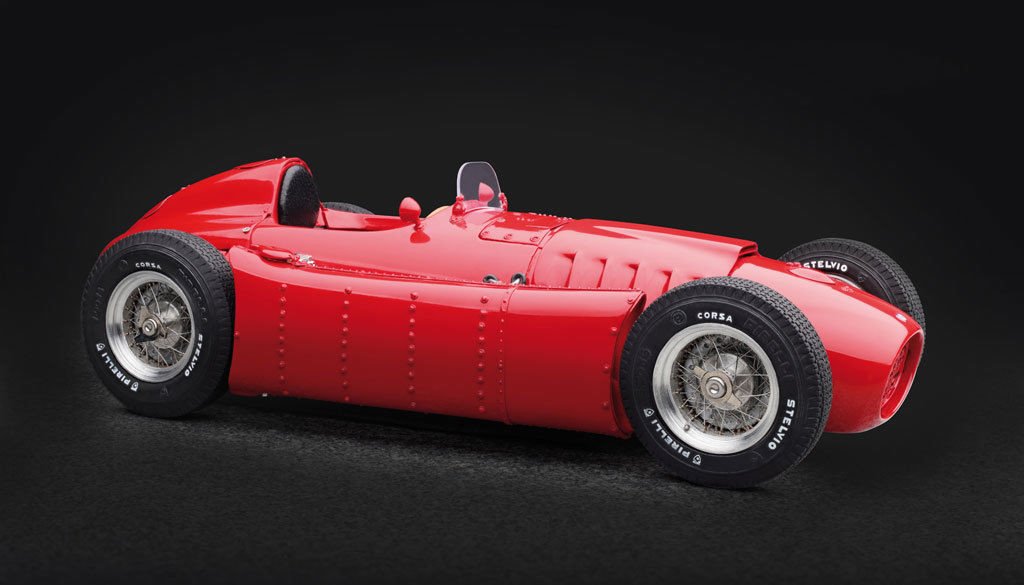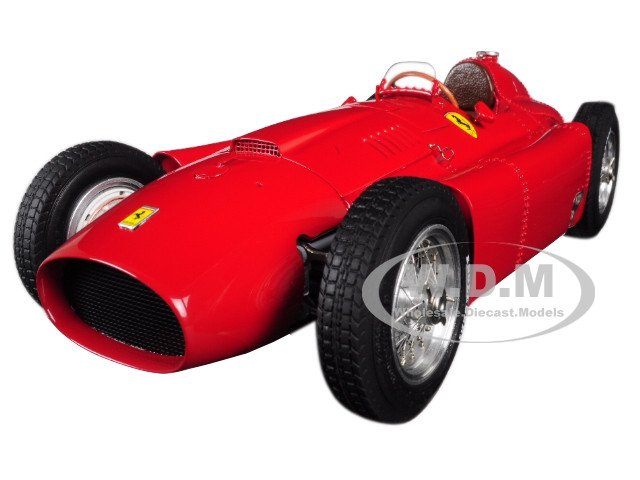
A historic Grand Prix shelf can show a complete racing silhouette, an uncovered engine, or a car stripped for a workshop scene. Those are different commitments. These three inspected CMC editions offer different reasons to move beyond a closed model; they do not represent a ranking of every historic racer.
| Display intention | Relevant exact model | Boundary |
|---|---|---|
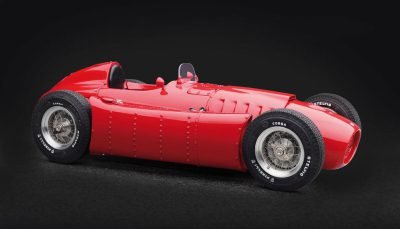
| Numbered prewar racer with the hood removed | M-104 W25, Fagioli number 4 | Six small working catches must be managed. |
| A chassis-centered workshop arrangement | M-175 plain Lancia D50 | Inspection samples include assembly and separation problems. |
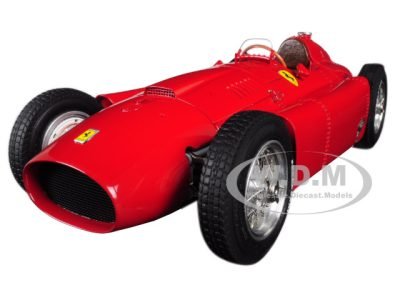
| Unnumbered Ferrari D50 with visible cockpit and engine details | M-180 red Ferrari D50 | Do not label the plain car as a particular numbered race entry. |
The most removable bodywork is not automatically the best choice
The Lancia inspection removes sections to expose the frame and suspension, but also finds a disconnected rear suspension fastening. A separate sample described in the same source would not release its rear body section. That makes the Lancia the more demanding option: its appeal and its reported problems concern the very operation a workshop display would use.
The number 4 W25 inspection instead centers on six functional hood catches and an exposed straight-eight. The plain Ferrari D50 account describes its pivoting windscreen, two hood clasps and removable wheels. These are observed functions, not proof that the mechanisms tolerate frequent casual handling.
Use the W25 review for the numbered prewar subject, the Lancia review for the dismantling qualifications, and the Ferrari review for the body and cockpit differences. The Ferrari source’s starting accessories are not promised as current offer contents without confirmation.